7 min read
How Often Should You Check Meta Ads in 2026?
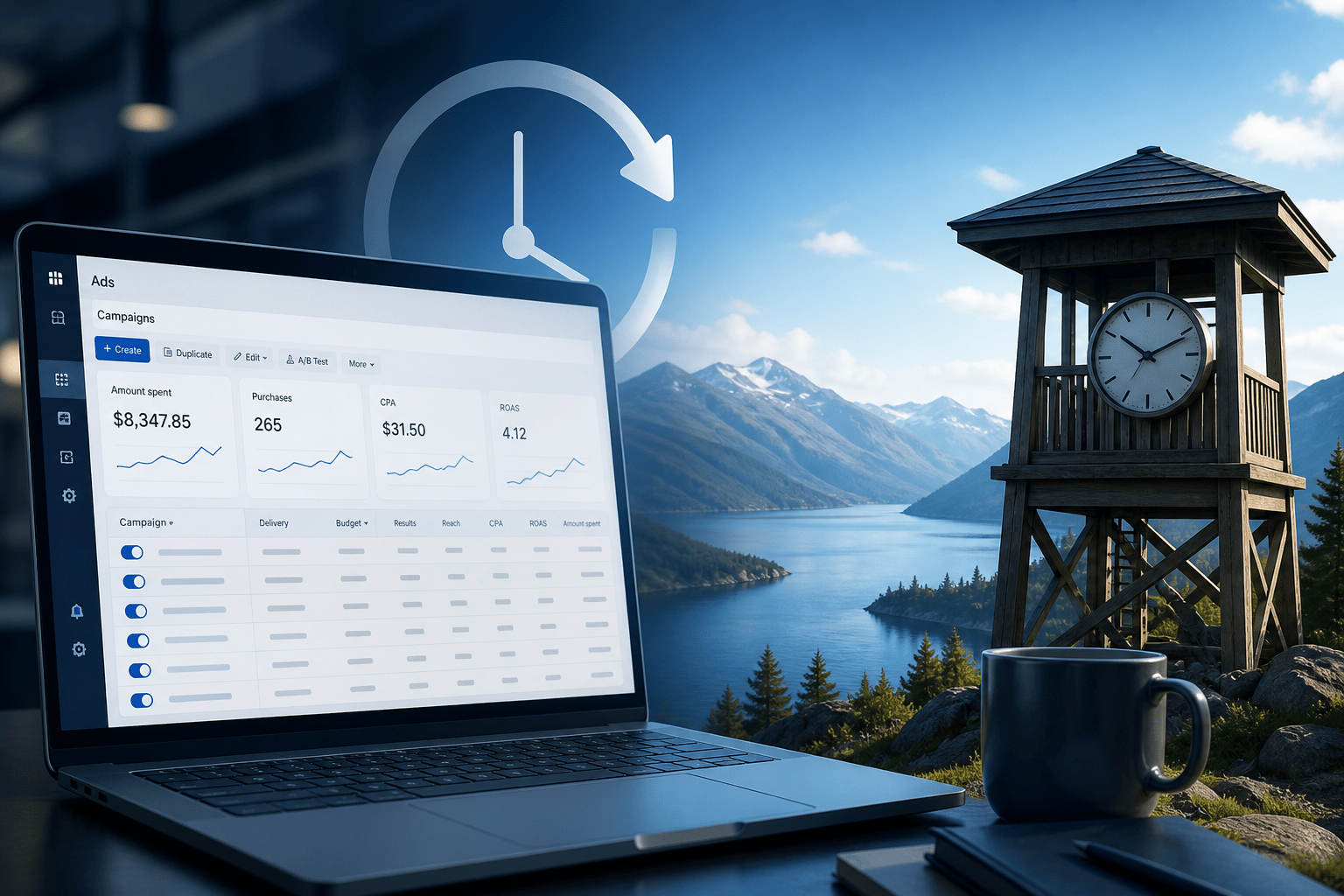
Most advertisers should not live inside Meta Ads Manager all day. In 2026, the better default is a short daily triage plus continuous monitoring that catches CPA spikes, budget overspend, and delivery breaks between those check-ins. How often you personally open the account still depends on spend, risk tolerance, and whether you run ads for one brand or a roster of clients.
The short answer
For most in-house teams spending under about $5k/day, one focused review per day is enough if something is watching the account the rest of the time. Agencies and high-spend accounts usually need two short check-ins, morning and late afternoon, plus faster monitoring during launches and sales. Opening Ads Manager every hour is rarely the job. Catching problems within the hour often is.
How often should you check Meta ads by situation?
Low to moderate daily spend
If you are running a few campaigns with stable creative and predictable delivery, a once-daily review works. Pick a consistent window, look at yesterday plus today so far, and leave. The mistake is either never checking or refreshing the same charts every twenty minutes and calling it management.
High spend or volatile acquisition
Once spend climbs, or CPA swings hard when creative fatigues, twice daily is safer: once after overnight delivery settles, once before the evening spend push. You are not looking for perfection. You are looking for anything that would keep burning budget before the next review.
Agencies managing multiple Meta accounts
Agencies cannot open every Ads Manager tab on a human cadence and still do strategy work. The practical pattern is one daily pass per account for health, then deeper weekly reviews for creative and structure. Between those passes, accounts need shared alerting so a bad CPA morning on Client A does not wait until Friday's status meeting.
Launches, sales, and Advantage+ tests
During big launches, Black Friday windows, or new Advantage+ setups still finding delivery, check more often for a short window, then dial back once the account stabilizes. Temporary intensity is fine. Permanent dashboard anxiety is not.
Checking vs monitoring: they are not the same job
"Checking Meta ads" usually means a person opening Ads Manager, scanning spend, CPA, ROAS, frequency, and learning status, then deciding what to change. That work still matters. Strategy, creative judgment, and budget allocation need a human who understands the brand.
Monitoring is different. Monitoring is the layer that notices when spend shape changes, CPA drifts above a guardrail, delivery collapses, or a campaign starts pacing toward overspend while you are in meetings. In 2026, the teams that waste less budget are not the ones staring at Ads Manager longest. They are the ones who separated decision time from catch rate.
If you only check once a day and nothing watches between reviews, a broken campaign can spend for hours before anyone notices. If you check constantly without clear thresholds, you react to noise and burn attention that should go to creative and offer work.
What to look at when you do check
A useful daily Meta review is short on purpose:
- Spend vs plan for today and the last 24 to 48 hours
- CPA or cost per result against the number you actually need to hit
- ROAS or contribution, not vanity CTR alone
- Delivery and learning status on anything recently edited
- Frequency and creative fatigue on top spend ad sets
- Anything that breached a rule since your last pass
Everything else can wait for a weekly deep dive. If your daily check routinely turns into a two-hour rebuild session, the account needs clearer guardrails, not more refresh cycles.
How often is too often?
Refreshing Ads Manager every hour feels productive and usually is not. Short windows are noisy. Meta delivery is uneven through the day. Reacting to a 45-minute CPA blip can pause winners, reset learning, and create the volatility you were trying to avoid.
A better rule: reserve human attention for decisions, and reserve continuous systems for detection. Check on a schedule. Investigate when a threshold is crossed. Do not treat every metric wiggle as a strategy meeting.
What continuous monitoring should catch between check-ins
Whether you use rules, an inbox-style monitor, or a mix, the between-check layer should surface things like:
- CPA or cost per result above a hard ceiling
- Daily budget pacing toward overspend too early
- Sudden spend drop on a core prospecting or retargeting campaign
- ROAS falling through a floor you care about
- Delivery or learning issues after a major edit
Those are the moments worth interrupting your day. Everything milder can wait for the next scheduled review.
A practical cadence for 2026
Use this as a default, then tighten it for your risk level:
- Morning triage (10 to 20 minutes): overnight results, active breaches, anything still broken from yesterday.
- Continuous monitoring all day: thresholds watched without you sitting in Ads Manager.
- Afternoon pass if spend or risk is high: catch pacing and creative issues before evening delivery.
- Weekly structure review: creative, audiences, offer, and account architecture.
That cadence keeps Meta ads managed without turning the dashboard into a second full-time job.
Where Curava fits
Curava is built around that split: you keep the final call, and the system watches between your reviews. Connect Meta (and Google if you run both), set guardrails in plain English or accept suggestions calibrated to your data, and anything material lands in one action inbox instead of five open tabs. Scheduled checks run every hour on Starter and every 15 minutes on Pro, with alerts you can route to email, Slack, or WhatsApp on Pro.
Before you connect an account, you can try a free export audit. Drop a Meta CSV, see weak spend and suggested guardrails, no signup.
If your real question is not "how many times should I refresh Ads Manager," but "how do I stop expensive problems from waiting until I happen to look," monitoring beats more manual checking. For the longer argument on that tradeoff, see why visibility beats autopilot for ad accounts.
FAQ
Is once a day enough for Meta ads?
Yes for many stable, lower-volatility accounts, as long as something is watching for threshold breaches between reviews. Once a day with no monitoring is often not enough once daily spend becomes material.
Should I check Meta ads on weekends?
If spend continues over the weekend, someone or something should be watching. A light weekend triage plus alerts is usually better than a full weekday-style rebuild session.
Do Advantage+ campaigns need more frequent checks?
Often yes early on, because delivery and creative mix can shift quickly. After performance stabilizes, move back toward your normal cadence and keep hard guardrails on CPA, spend, and ROAS.
How is checking Meta ads different from Google Ads?
The principle is the same: scheduled human review plus continuous detection. The metrics and failure modes differ, which is why multi-platform teams usually want one inbox across both rather than two separate refresh habits.